Mobile Money vs Bank Transfer for African Sellers
In much of Africa, mobile money moves more everyday transactions than bank transfers. Here's how sellers should think about both.
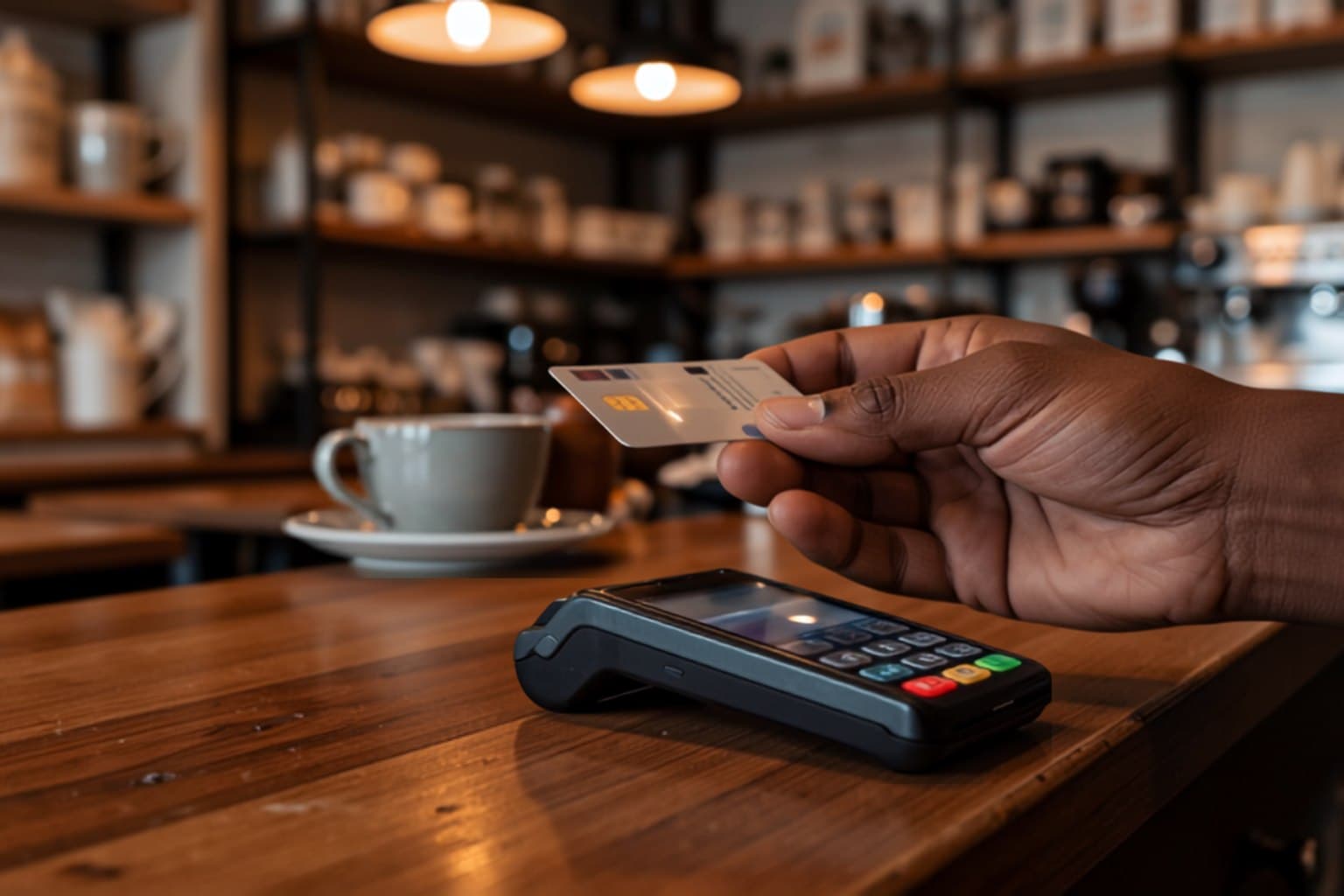
If you're used to doing business in Nigeria, where bank transfer and cards dominate online payment, it can be genuinely surprising how differently money moves in much of the rest of Africa. In Kenya, Ghana, Uganda, and several other markets, mobile money isn't a niche alternative, it's often the primary way ordinary people pay for things. If you're selling across borders or expanding into these markets, understanding the difference matters.
What mobile money actually is
Mobile money is a wallet tied directly to a phone number and SIM card rather than a traditional bank account. Services like M-Pesa in Kenya, MTN Mobile Money in Ghana and Uganda, and Airtel Money across several markets let users deposit cash through a widespread network of local agents, then send, receive, and pay using nothing more than a basic phone and USSD codes or an app. Critically, it doesn't require ever opening a bank account, which is a huge part of why it became so dominant in markets with lower rates of traditional banking access.
How agent networks make it all work
The part of mobile money that's easy to overlook is the agent network underneath it. Across Kenya, Ghana, Uganda, and similar markets, small local agents, often a shop or kiosk in every neighborhood, let people convert cash into mobile money balance and back again. This is what makes mobile money genuinely accessible even to someone without a smartphone or a bank branch anywhere nearby: they can walk to a trusted local agent, hand over cash, and have a usable digital balance within minutes. For sellers, this matters because it explains why mobile money adoption runs so deep in these markets — it's not a digital nice-to-have layered on top of banking, it's often the first and only financial tool many customers have ever used.
What bank transfer means in this context
Bank transfer, whether in Nigeria or elsewhere, means moving money directly between traditional bank accounts, typically through the kind of reserved virtual account systems we cover in bank transfer vs card payment. It requires both parties to have functioning bank accounts and, usually, some familiarity with mobile or internet banking.
Where each one actually dominates
These patterns shift over time as banking infrastructure and smartphone access expand, but they've remained fairly consistent for years and are unlikely to reverse quickly.
- Kenya — M-Pesa is enormous, used by the vast majority of the adult population for everyday transactions, arguably the most successful mobile money product in the world.
- Ghana and Uganda — MTN Mobile Money and similar services are dominant, often outpacing traditional bank transfer for everyday payments.
- Nigeria — bank transfer and card remain the dominant online payment methods, with mobile money still growing but not yet as central to daily commerce as it is elsewhere.
- South Africa and Rwanda — a more mixed picture, with strong traditional banking penetration alongside a growing mobile money presence.
Comparing the two directly
| Factor | Mobile money | Bank transfer |
|---|---|---|
| Accessibility | Very high — works with just a SIM card, no bank account needed | Requires an active bank account |
| Where it dominates | Kenya, Ghana, Uganda, and other East/West African markets | Nigeria, South Africa, and more banked economies |
| Speed | Typically instant | Often instant with virtual accounts, otherwise minutes to hours |
| Best suited for | Everyday, lower-value consumer purchases | Larger transactions, business-to-business payments |
What this means for your fees as a seller
Mobile money transactions typically carry their own fee structure, separate from card or bank transfer fees, and it's usually a processor like Flutterwave that handles the conversion between a mobile money payment and a settled payout to you, in whichever currency and account you actually use. As with any payment method, it's worth understanding roughly how that fee compares to your other options rather than assuming it's automatically cheaper or more expensive. In practice, for markets where mobile money dominates, the fee difference matters far less than simply being able to accept the payment method your customers already have in their pocket, since the alternative usually isn't a customer choosing a different payment method, it's a lost sale entirely.
Why sellers shouldn't assume one method fits every market
The mistake a lot of expanding sellers make is assuming that what works in Nigeria will automatically work in Ghana or Kenya. Offering only bank transfer to a customer base that overwhelmingly transacts through mobile money is a fast way to lose sales you never even see reflected as lost, because the customer simply never attempts to check out in the first place. This is easy to miss if you're only looking at your own sales dashboard, since a customer who abandons checkout because their preferred payment method isn't available typically leaves no trace at all, no error message, no support ticket, just a sale that quietly never happened. If you're actively expanding across African markets, it's worth reading our broader guide on how cross-border payments work for small businesses, since payment method preference is just one part of a bigger picture that includes currency and compliance.
How Bifixit supports both, depending on where you sell
This is precisely why Bifixit's payout structure is built around where a seller is actually based rather than a one-size-fits-all approach. Sellers in Ghana, Kenya, Rwanda, South Africa, and Uganda are settled through Flutterwave, which supports both bank transfer and mobile money (you can compare Flutterwave's broader footprint in our Paystack vs Flutterwave vs Monnify comparison), so your customers can pay the way they're already used to paying, without you needing to separately research and integrate a mobile money provider yourself. Nigerian sellers are settled through Monnify, and everyone else through Stripe. Whichever market you're selling into, the underlying rail matches local habits automatically.
If you're selling, or planning to sell, across more than one African market, set up your Bifixit shop and let the payout routing handle the regional differences for you.
Ready to start your own shop?
Tell us what you sell. Get a priced catalog and a shop link in minutes.
Start selling free →